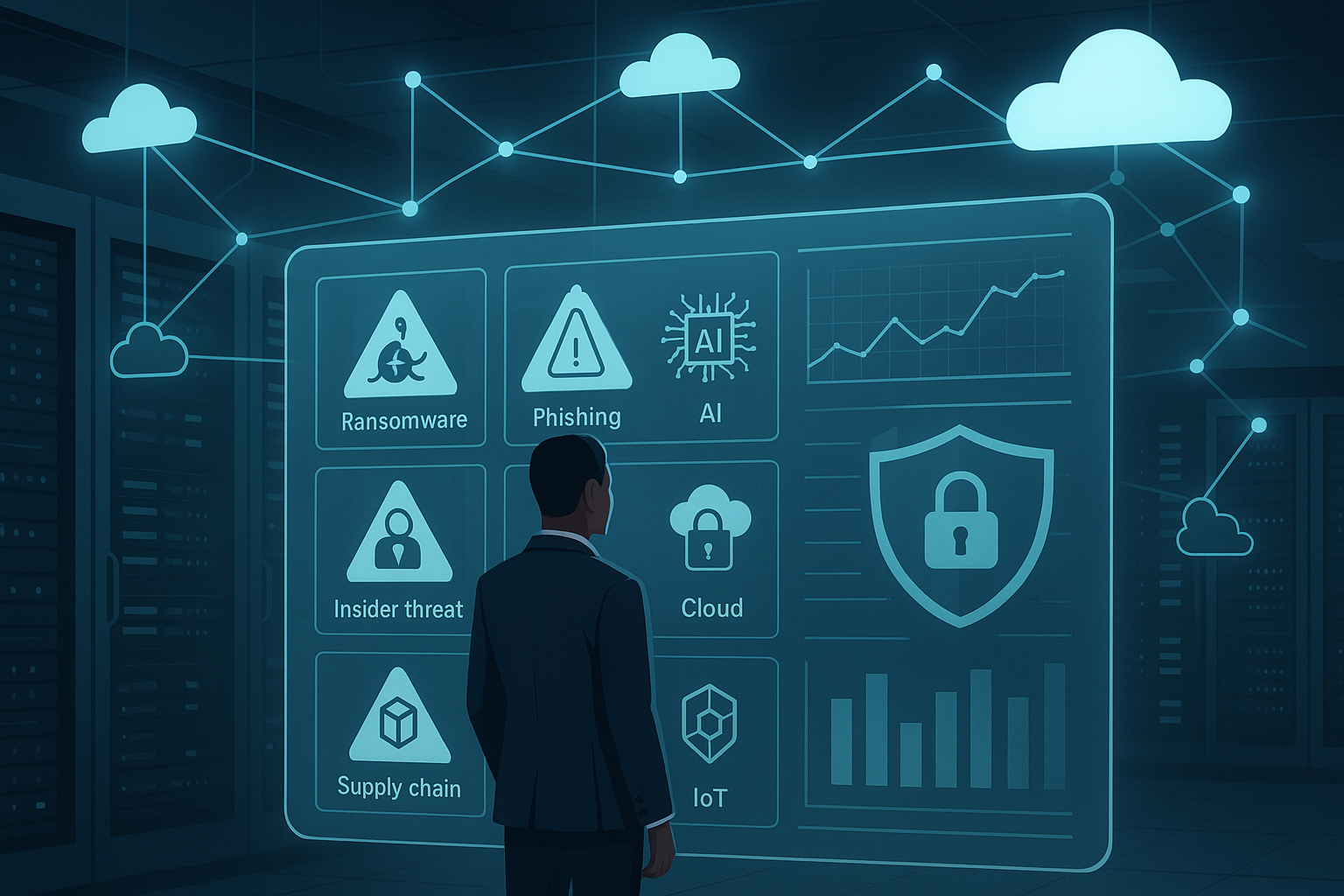
In today’s digital world, cybersecurity is no longer just an IT concern—it’s a business necessity. As companies continue to embrace cloud computing, remote work, artificial intelligence, and digital transformation, cybercriminals are finding new ways to exploit vulnerabilities.
A single cyberattack can lead to financial losses, damaged reputation, operational disruptions, and even legal consequences. Regardless of size, every business is a potential target. Understanding the latest cybersecurity threats is the first step toward building a stronger defense.
Here are the top cybersecurity threats businesses should watch in 2026 and beyond.
1. Ransomware Attacks
Ransomware remains one of the most dangerous cyber threats facing businesses today.
In a ransomware attack, hackers encrypt an organization’s files and demand payment in exchange for restoring access. These attacks can halt operations, disrupt customer services, and cause significant financial damage.
Cybercriminals are becoming more sophisticated by targeting backups and threatening to leak sensitive data if ransoms are not paid.
Businesses can reduce risk by:
- Maintaining secure backups
- Updating software regularly
- Training employees on cybersecurity awareness
- Using advanced threat detection tools
2. Phishing and Social Engineering
Phishing attacks continue to be one of the easiest ways for hackers to gain access to company systems.
Attackers send fake emails, messages, or websites that appear legitimate. Their goal is to trick employees into sharing passwords, financial information, or confidential data.
Modern phishing campaigns are becoming increasingly convincing, especially with the use of AI-generated content.
To protect against phishing:
- Verify suspicious emails
- Use multi-factor authentication
- Conduct employee security training
- Implement email filtering solutions
3. AI-Powered Cyberattacks
Artificial Intelligence is helping businesses improve efficiency, but cybercriminals are also using AI to launch more sophisticated attacks.
AI can help attackers:
- Generate realistic phishing emails
- Automate malware creation
- Analyze vulnerabilities faster
- Conduct large-scale cyber campaigns
As AI technology advances, businesses must invest in modern security tools capable of detecting AI-driven threats.
4. Insider Threats
Not all cybersecurity threats come from external attackers.
Insider threats occur when employees, contractors, or partners intentionally or accidentally expose sensitive information.
Examples include:
- Sharing confidential files
- Weak password practices
- Unauthorized data access
- Employee negligence
Businesses should implement strict access controls and regularly monitor user activity to reduce insider risks.
5. Cloud Security Risks
Cloud computing has transformed how businesses store and manage data. However, cloud environments can become targets if not configured properly.
Common cloud security issues include:
- Misconfigured storage settings
- Weak authentication systems
- Unsecured APIs
- Data exposure
Organizations should regularly audit cloud environments and follow security best practices to protect sensitive information.
6. Supply Chain Attacks
Modern businesses rely on third-party software providers, vendors, and service partners.
Cybercriminals often target these external partners to gain access to larger organizations.
A vulnerability in one supplier can potentially affect thousands of businesses.
Companies should carefully evaluate vendors and require strong cybersecurity standards throughout their supply chains.
7. Internet of Things (IoT) Vulnerabilities
The growing use of smart devices creates additional security risks.
IoT devices such as cameras, sensors, printers, and connected equipment often have weak security protections.
Hackers can exploit these vulnerabilities to access business networks.
Organizations should:
- Update device firmware regularly
- Change default passwords
- Segment IoT devices from critical systems
8. Credential Theft
Passwords remain one of the weakest links in cybersecurity.
Attackers use stolen credentials from previous data breaches to access business accounts and systems.
Strong password policies, password managers, and multi-factor authentication can significantly reduce this risk.
Building a Strong Cybersecurity Strategy
Businesses should focus on prevention rather than reacting after an attack occurs.
Key cybersecurity practices include:
- Employee security awareness training
- Regular software updates
- Multi-factor authentication
- Network monitoring
- Data encryption
- Incident response planning
Cybersecurity is not a one-time investment but an ongoing process that requires continuous improvement.
Final Thoughts
Cyber threats are becoming more advanced every year, making cybersecurity a top priority for businesses of all sizes. From ransomware and phishing attacks to AI-powered threats and cloud vulnerabilities, organizations must stay informed and proactive.
Companies that invest in cybersecurity today will be better prepared to protect their data, customers, and reputation in the future. In an increasingly digital world, strong cybersecurity is no longer optional—it’s essential for long-term success.