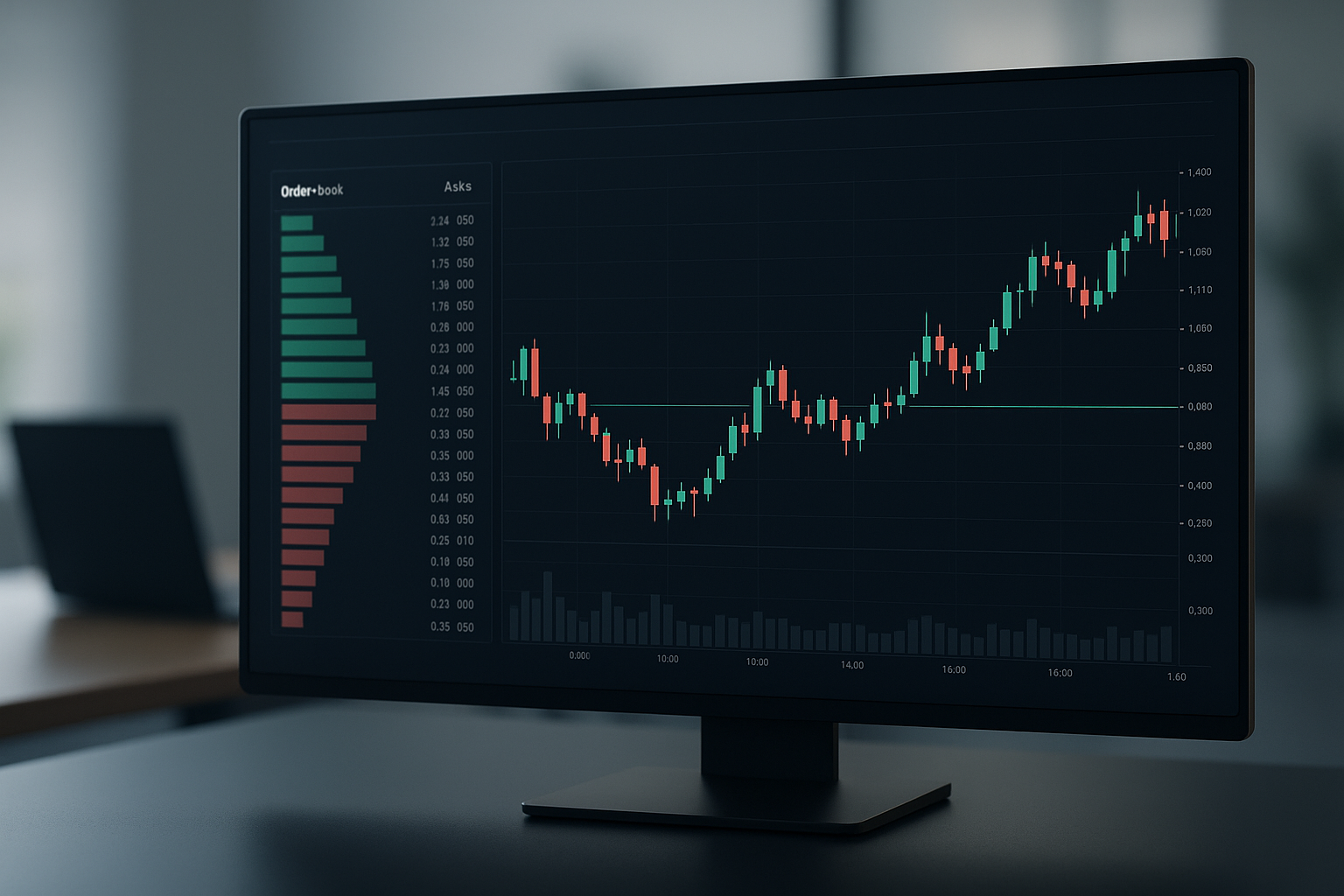
The cryptocurrency market has grown rapidly over the past decade, attracting millions of investors and traders worldwide. While many people focus on prices, market trends, and popular coins, two important concepts often go unnoticed: liquidity and market depth.
These factors play a crucial role in determining how smoothly a cryptocurrency can be bought or sold without causing significant price changes. Whether you’re a beginner or an experienced trader, understanding liquidity and market depth can help you make smarter investment decisions and avoid unexpected trading risks.
In this guide, we’ll explore what crypto liquidity and market depth mean, why they matter, and how they affect the overall cryptocurrency ecosystem.
What Is Crypto Liquidity?
Liquidity refers to how easily a cryptocurrency can be bought or sold in the market without significantly affecting its price.
A highly liquid market has a large number of buyers and sellers actively trading. Because there are many participants, transactions happen quickly and with minimal price fluctuations.
On the other hand, a market with low liquidity has fewer participants, making it harder to execute large trades without causing major price changes.
For example, if thousands of people are trading Bitcoin every minute, buying or selling a moderate amount usually has little effect on the market price. However, trading a lesser-known cryptocurrency with limited activity may cause noticeable price swings.
Why Liquidity Matters
Liquidity is one of the most important indicators of a healthy market.
Easier Buying and Selling
High liquidity allows investors to enter or exit positions quickly without waiting for buyers or sellers.
Stable Prices
Markets with strong liquidity generally experience smoother price movements and lower volatility.
Reduced Trading Costs
Better liquidity often results in smaller bid-ask spreads, helping traders execute orders more efficiently.
Increased Investor Confidence
Investors are more comfortable participating in markets where assets can be traded easily and fairly.
For these reasons, liquidity is often considered a key sign of market maturity.
What Is Market Depth?
Market depth refers to the market’s ability to absorb large buy or sell orders without causing significant price movements.
It reflects the number of pending buy and sell orders available at different price levels.
A market with strong depth contains many orders on both sides of the order book, allowing large transactions to occur with limited price impact.
Shallow markets have fewer orders, making prices more sensitive to large trades.
Market depth helps traders understand how much demand and supply exist at various price points.
Understanding the Order Book
Every cryptocurrency exchange maintains an order book.
The order book displays:
- Buy orders (bids)
- Sell orders (asks)
- Order quantities
- Price levels
When many buy and sell orders exist close to the current market price, the market is considered deep.
If only a few orders are available, even a relatively small transaction can shift prices significantly.
Professional traders often analyze order books to evaluate market conditions before placing trades.
The Relationship Between Liquidity and Market Depth
Although liquidity and market depth are closely related, they are not exactly the same.
Liquidity measures how easily assets can be traded.
Market depth measures how many orders are available to support those trades.
A market can have moderate liquidity but limited depth if only small orders exist.
Generally, deeper markets contribute to stronger liquidity because they provide greater buying and selling capacity.
Understanding both concepts gives investors a more complete picture of market conditions.
Factors That Influence Crypto Liquidity
Several factors affect liquidity in cryptocurrency markets.
Trading Volume
Higher daily trading volume usually indicates better liquidity.
Number of Active Participants
Markets with many buyers and sellers tend to have stronger liquidity.
Exchange Reputation
Large, well-established exchanges often provide greater liquidity than smaller platforms.
Market Sentiment
Positive market conditions typically attract more trading activity and improve liquidity.
Institutional Participation
When financial institutions enter the market, they often increase liquidity through larger transaction volumes.
These factors can change over time, causing liquidity levels to fluctuate.
How Low Liquidity Creates Risks
Low liquidity introduces several challenges for traders and investors.
Price Slippage
Large orders may execute at less favorable prices than expected.
Increased Volatility
Even relatively small trades can trigger sharp price movements.
Difficult Exits
Investors may struggle to sell assets quickly during market stress.
Higher Trading Costs
Wider bid-ask spreads increase transaction expenses.
For these reasons, many investors prefer cryptocurrencies with established liquidity.
Why Market Depth Matters for Large Investors
Institutional investors and large traders pay close attention to market depth.
Suppose a company wants to purchase millions of dollars worth of a cryptocurrency.
If market depth is weak, placing such a large order could significantly increase prices before the purchase is completed.
Similarly, selling a large position in a shallow market could push prices downward.
Deep markets help absorb large transactions while minimizing disruption.
This stability attracts institutional participation and contributes to overall market growth.
Liquidity Across Different Cryptocurrencies
Not all cryptocurrencies have the same liquidity.
Major cryptocurrencies like Bitcoin and Ethereum generally have high trading volume and deep order books.
Smaller or newly launched tokens often experience lower liquidity because fewer participants are actively trading them.
Before investing in lesser-known assets, traders should evaluate liquidity to understand potential risks.
A promising project may still be difficult to trade if market activity remains limited.
How Investors Can Evaluate Liquidity
Several indicators help investors assess market liquidity.
Daily Trading Volume
Higher volume often signals stronger liquidity.
Bid-Ask Spread
A narrow spread usually indicates efficient trading conditions.
Exchange Listings
Assets listed on multiple major exchanges tend to have better liquidity.
Order Book Analysis
Reviewing buy and sell orders provides insight into market depth.
Monitoring these metrics helps investors make better-informed decisions before entering positions.
The Role of Liquidity in Market Stability
Liquidity contributes significantly to overall market stability.
Highly liquid markets can absorb news events and trading activity more effectively, reducing extreme price swings.
Low-liquidity markets, however, often experience rapid volatility driven by relatively small transactions or sudden changes in sentiment.
As cryptocurrency adoption continues to grow and institutional participation increases, overall market liquidity may improve further.
Greater liquidity benefits traders, investors, businesses, and the broader digital asset ecosystem.
Final Thoughts
Understanding crypto liquidity and market depth is essential for anyone involved in cryptocurrency investing or trading. While price charts often receive the most attention, liquidity determines how easily assets can be bought or sold, and market depth reveals the strength of buying and selling activity behind those prices.
High liquidity and deep markets generally lead to smoother trading, lower volatility, and greater investor confidence. In contrast, low-liquidity markets can expose participants to slippage, sharp price movements, and higher trading risks.
By evaluating liquidity alongside other investment factors, investors can make more informed decisions and better navigate the fast-moving world of digital assets. As the crypto industry continues to mature, liquidity and market depth will remain fundamental indicators of market health and long-term sustainability.