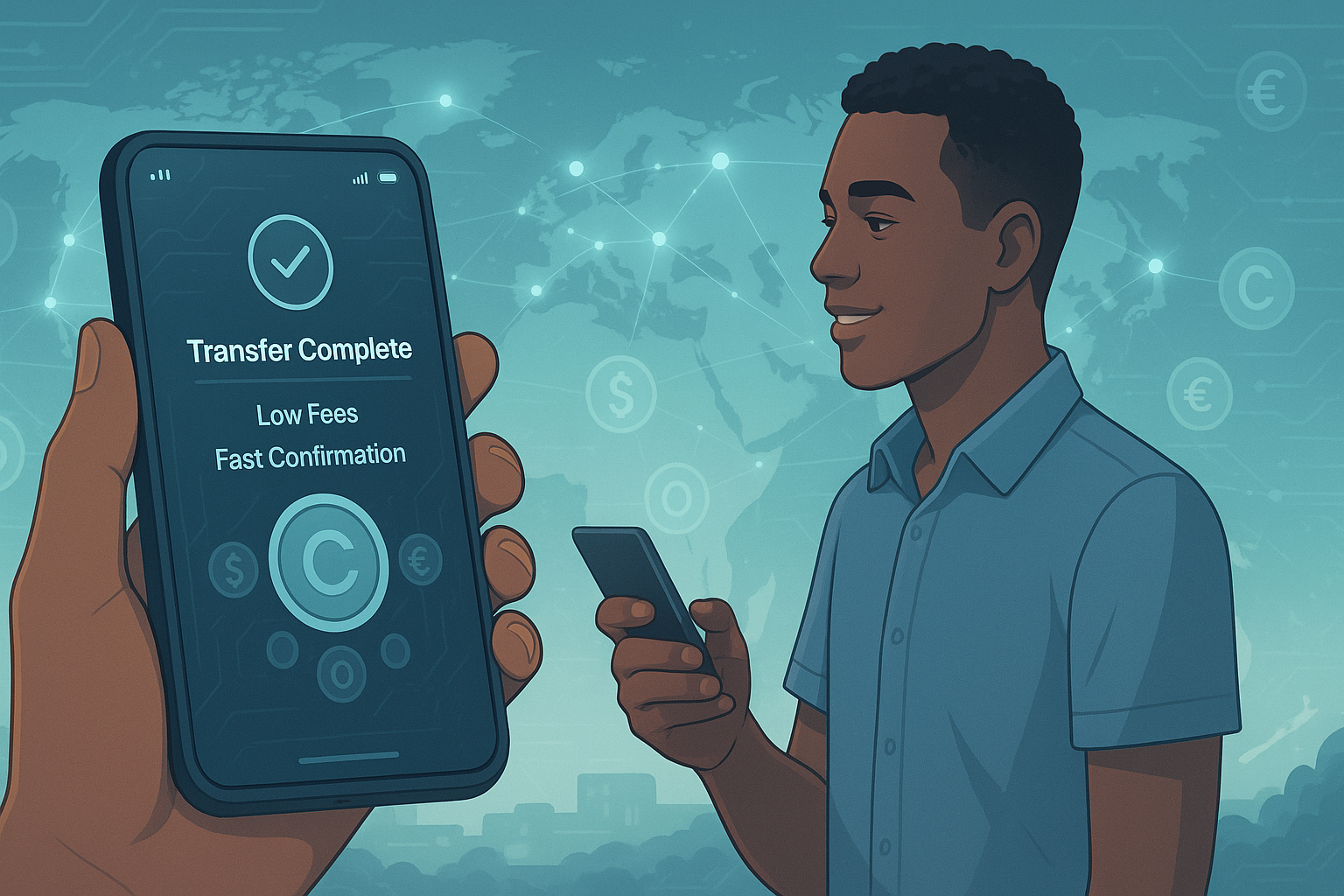
Global remittances play a vital role in the world economy. Millions of people living and working abroad regularly send money to their families in other countries, helping to cover everyday expenses, education, healthcare, and housing. According to international financial reports, remittance flows amount to hundreds of billions of dollars each year, making them an essential source of income for many households.
Despite their importance, traditional remittance services often involve high transaction fees, lengthy processing times, and multiple financial intermediaries. These challenges have encouraged businesses and consumers to explore alternative payment solutions. Among the most discussed innovations is cryptocurrency.
Powered by blockchain technology, cryptocurrencies offer a new approach to transferring value across borders. While adoption is still developing, digital assets are increasingly being considered as a tool that could improve the speed, accessibility, and efficiency of international remittances.
Understanding Global Remittances
A remittance is money sent by an individual working in one country to family members or friends living in another country.
Traditional remittance services usually involve banks, money transfer companies, and financial institutions that process transactions before funds reach the recipient.
Although these systems are well established, international transfers can sometimes take several days and include multiple service charges.
For people sending money regularly, these costs can significantly reduce the amount ultimately received by their families.
How Cryptocurrency Changes Cross-Border Payments
Cryptocurrency enables value to move directly across blockchain networks without depending entirely on conventional banking infrastructure.
Instead of processing payments through multiple intermediaries, transactions can often be completed more efficiently using decentralized systems.
This approach has attracted attention because blockchain technology operates continuously, allowing transfers to occur regardless of standard banking hours.
For international workers sending financial support home, faster settlement may offer meaningful practical benefits.
Lower Transaction Costs
One of the main reasons cryptocurrencies are being explored for remittances is the potential to reduce fees.
Traditional cross-border transfers often include:
- Bank processing charges
- Currency conversion fees
- Service commissions
- Intermediary costs
Blockchain-based payment systems can simplify transaction pathways, reducing the number of organizations involved.
While costs vary depending on the platform and network conditions, digital transfers may provide a more affordable option in certain situations.
Lower fees allow recipients to receive a larger portion of the money originally sent.
Faster Money Transfers
Time is often critical when families rely on financial support from abroad.
Traditional international payments may require several business days before arriving.
Cryptocurrency transactions can often be processed much more quickly because blockchain networks operate around the clock.
Instead of waiting for banking schedules or holiday closures, transfers may be confirmed within minutes or hours depending on the blockchain being used.
This speed can be especially valuable during emergencies or urgent financial situations.
Expanding Financial Inclusion
Millions of people around the world still have limited access to traditional banking services.
However, many have access to smartphones and internet connections.
Cryptocurrency wallets provide an alternative way to receive and manage digital funds without necessarily requiring a conventional bank account.
For underserved populations, blockchain-based financial tools may improve participation in the digital economy while increasing access to cross-border payments.
Although infrastructure challenges remain, financial inclusion represents one of cryptocurrency’s most promising long-term applications.
Supporting International Freelancers
The rise of remote work has created a growing global freelance economy.
Professionals often work for clients located in different countries and receive payments internationally.
Cryptocurrency provides an additional payment option that can simplify certain cross-border transactions while reducing reliance on traditional banking systems.
For freelancers operating across multiple markets, blockchain-based payments may offer greater flexibility and faster access to earnings.
Transparency Through Blockchain
Every cryptocurrency transaction is recorded on a blockchain ledger.
This transparent record allows participants to verify transfers while reducing uncertainty about payment status.
Improved visibility may help businesses and individuals monitor transactions more effectively compared to systems where multiple intermediaries are involved.
Although privacy protections vary across different networks, blockchain generally provides stronger transaction traceability than many traditional payment methods.
Challenges Limiting Adoption
Despite its advantages, cryptocurrency is not yet a universal solution for global remittances.
Several challenges remain.
Price Volatility
Some cryptocurrencies experience significant market fluctuations that can affect transferred value.
Regulatory Differences
Governments around the world maintain different policies regarding cryptocurrency usage and compliance.
Limited Public Awareness
Many people remain unfamiliar with blockchain technology and digital wallets.
Technical Accessibility
Reliable internet access and basic digital literacy are necessary for using cryptocurrency effectively.
These factors continue influencing adoption rates across different regions.
The Role of Stable Digital Assets
To address volatility concerns, many remittance providers are exploring digital assets designed for more stable pricing.
These blockchain-based payment solutions seek to combine transaction efficiency with reduced price fluctuations.
For businesses facilitating international payments, stable digital assets may provide greater predictability while retaining many blockchain advantages.
Continued innovation in this area could encourage broader commercial adoption.
The Future of Cryptocurrency in Remittances
As blockchain technology matures and regulatory frameworks become clearer, cryptocurrency may play an increasingly important role in global payment systems.
Future developments could include:
- Faster international settlements
- Lower remittance costs
- Improved mobile payment integration
- Enhanced financial inclusion
- Greater collaboration between fintech companies and blockchain providers
- More user-friendly digital wallet solutions
Although traditional financial institutions will continue playing an important role, blockchain-based alternatives are expected to become more common.
Final Thoughts
Cryptocurrency is gradually influencing the global remittance industry by offering new ways to transfer money across borders more efficiently. Through blockchain technology, digital assets have the potential to reduce transaction costs, accelerate settlement times, improve transparency, and expand financial access for underserved communities.
While challenges such as regulation, market volatility, and public awareness still need to be addressed, ongoing technological innovation continues to strengthen cryptocurrency’s role in international finance. Rather than replacing existing payment systems overnight, blockchain-based remittance solutions are emerging as complementary tools that can improve global money transfers.
As adoption grows and infrastructure evolves, cryptocurrency could become an increasingly important component of the future digital economy, helping individuals and businesses connect across borders with greater speed and efficiency.