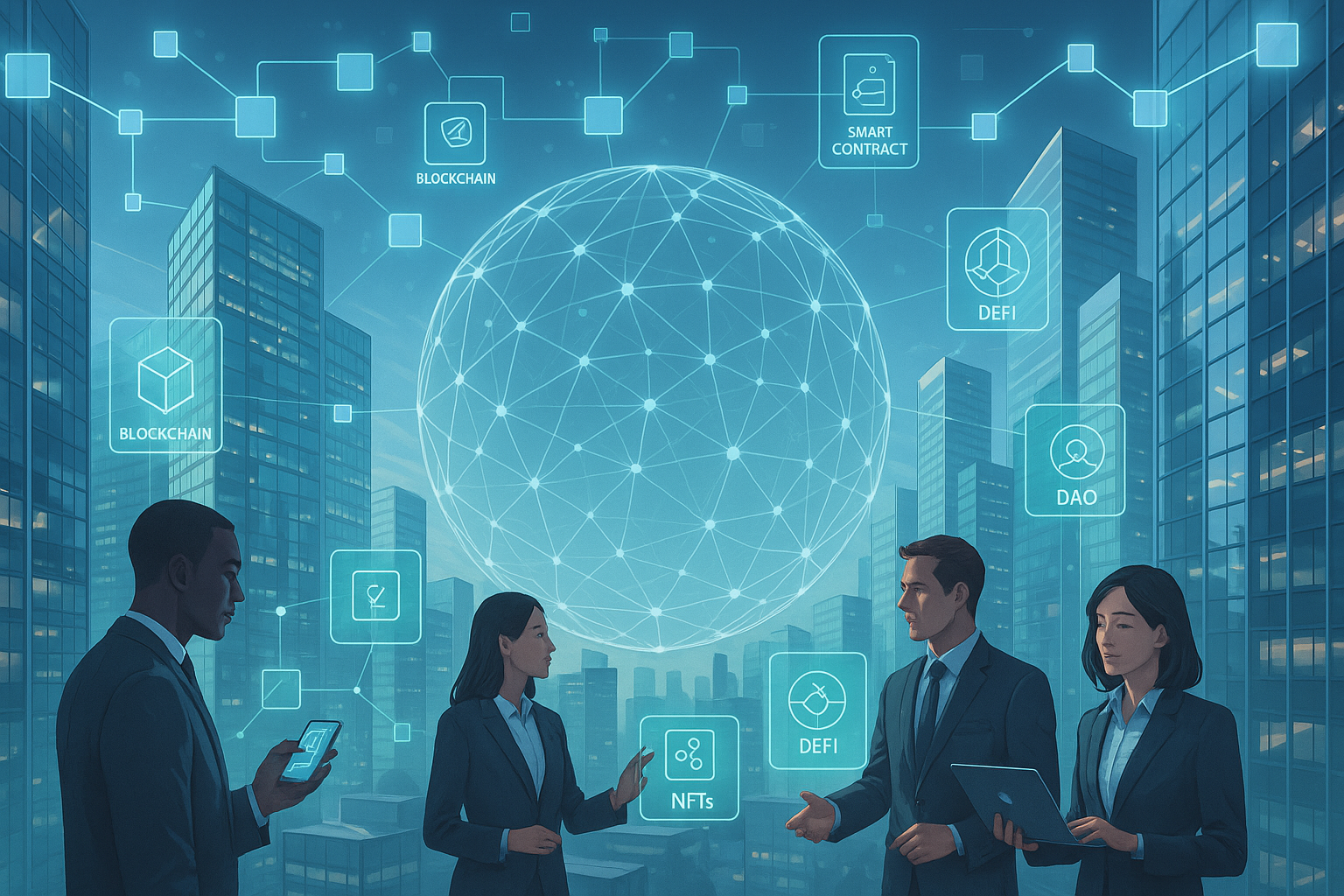
The internet has evolved dramatically over the past two decades. From static websites in the early days of the internet to social media platforms and cloud-based applications, technology continues to reshape how businesses operate. Now, a new era known as Web3 is beginning to transform the digital landscape once again.
Web3 is not just another tech trend. It represents a major shift toward a decentralized internet where users have more control over their data, digital assets, and online interactions. Powered by blockchain technology, Web3 is creating new opportunities for businesses to operate more securely, transparently, and efficiently.
As we move into 2026, businesses around the world are expected to adopt Web3 technologies faster than ever before. Industries such as finance, healthcare, gaming, real estate, e-commerce, and supply chain management are already exploring how decentralized systems can improve their operations.
In this article, we will explore how Web3 will change businesses in 2026 and why companies should prepare for this digital transformation.
Understanding Web3
Web3 refers to the next generation of the internet built on decentralized technologies such as blockchain, smart contracts, decentralized applications (dApps), and digital assets. Unlike traditional Web2 platforms that rely on centralized control, Web3 allows users to own and manage their digital identities and data.
In the current internet model, large corporations often control user information and online platforms. Web3 changes this by creating peer-to-peer systems where transparency and ownership are distributed across networks rather than centralized servers.
This shift has the potential to redefine how businesses interact with customers, manage operations, and build trust.
Greater Transparency and Trust
One of the biggest advantages of Web3 technology is transparency. Blockchain networks store information in a way that is secure, permanent, and publicly verifiable. Every transaction or update is recorded on a digital ledger that cannot easily be altered.
For businesses, this means:
- Improved customer trust
- Reduced fraud
- Better accountability
- Transparent financial transactions
- Easier auditing processes
Consumers today care more about transparency than ever before. They want to know where products come from, how companies handle data, and whether businesses operate ethically. Web3 can help companies build stronger trust with their audiences.
Smart Contracts Will Automate Business Operations
Smart contracts are self-executing agreements stored on blockchain networks. These contracts automatically perform actions when predefined conditions are met.
In 2026, smart contracts are expected to become a core part of business operations. Companies can use them to automate payments, agreements, and workflows without relying on intermediaries.
For example:
- Freelancers can receive instant payments once work is completed
- Insurance claims can be processed automatically
- Real estate contracts can execute digitally
- Subscription services can renew automatically
By reducing paperwork and manual processes, smart contracts help businesses save time, reduce costs, and improve efficiency.
Decentralized Finance (DeFi) Will Reshape Banking
Traditional banking systems often involve high fees, slow international transfers, and complicated approval processes. Decentralized Finance, commonly known as DeFi, offers an alternative financial ecosystem powered by blockchain.
In 2026, businesses may increasingly use DeFi platforms for:
- International payments
- Business loans
- Digital payroll systems
- Investment opportunities
- Asset management
DeFi eliminates many middlemen involved in financial transactions, making services faster and more affordable. Small businesses and startups especially may benefit from easier access to financial tools without depending entirely on traditional banks.
Better Data Security and Privacy
Cybersecurity threats continue to grow globally. Data breaches and hacking incidents have become major concerns for businesses and consumers alike.
Web3 improves security by decentralizing data storage across blockchain networks. Instead of storing sensitive information on one central server, data is distributed securely across multiple nodes.
This approach provides:
- Better protection against hacking
- Improved user privacy
- Reduced risk of single-point failures
- More secure digital identities
In a world where data protection is becoming increasingly important, Web3 offers businesses a safer way to manage information.
NFTs and Digital Ownership
NFTs, or Non-Fungible Tokens, introduced the concept of digital ownership to mainstream audiences. Although NFTs first gained popularity through digital art, their business applications extend far beyond collectibles.
Businesses in 2026 may use NFTs for:
- Loyalty rewards programs
- Event tickets
- Membership access
- Exclusive digital content
- Gaming assets
- Virtual real estate
NFTs create new opportunities for customer engagement while giving users true ownership of digital assets.
DAOs Will Change Organizational Structures
Decentralized Autonomous Organizations, known as DAOs, are blockchain-based communities governed by smart contracts and community voting.
Instead of relying entirely on centralized management, DAOs allow members to participate in decision-making processes transparently.
Businesses may use DAOs for:
- Community-driven projects
- Investment groups
- Startup governance
- Crowdfunding
- Collaborative development
This model can increase transparency and encourage stronger community participation.
Web3 and the Metaverse
The metaverse is another growing area connected to Web3 technology. Virtual worlds are becoming digital spaces where people can socialize, work, shop, and attend events.
Businesses are already exploring opportunities in:
- Virtual stores
- Digital advertising
- NFT-based products
- Virtual events
- Gaming economies
As virtual experiences continue growing in popularity, Web3 technologies will likely power many aspects of the metaverse economy.
Supply Chain and Logistics Improvements
Supply chain management often suffers from poor tracking systems and counterfeit products. Blockchain technology can solve these issues by creating transparent and traceable records.
With Web3 solutions, businesses can:
- Track products in real time
- Verify authenticity
- Improve inventory management
- Reduce fraud
- Increase operational efficiency
Industries such as food, pharmaceuticals, and luxury goods are already adopting blockchain-based supply chains.
Challenges Businesses Face
Despite its potential, Web3 still faces several challenges:
- Regulatory uncertainty
- Technical complexity
- Scalability issues
- Lack of public understanding
- Security vulnerabilities in poorly designed systems
However, as technology matures and adoption increases, these challenges are expected to become easier to manage.
Final Thoughts
Web3 is transforming the way businesses operate by introducing decentralization, transparency, automation, and digital ownership. In 2026, businesses that adopt Web3 technologies early may gain a strong competitive advantage in the digital economy.
From smart contracts and DeFi to NFTs and DAOs, Web3 is opening the door to a more secure and efficient internet. While challenges remain, the future of Web3 looks incredibly promising for businesses willing to innovate and adapt.
The companies that embrace blockchain-powered technologies today are preparing themselves for the future of the internet tomorrow.