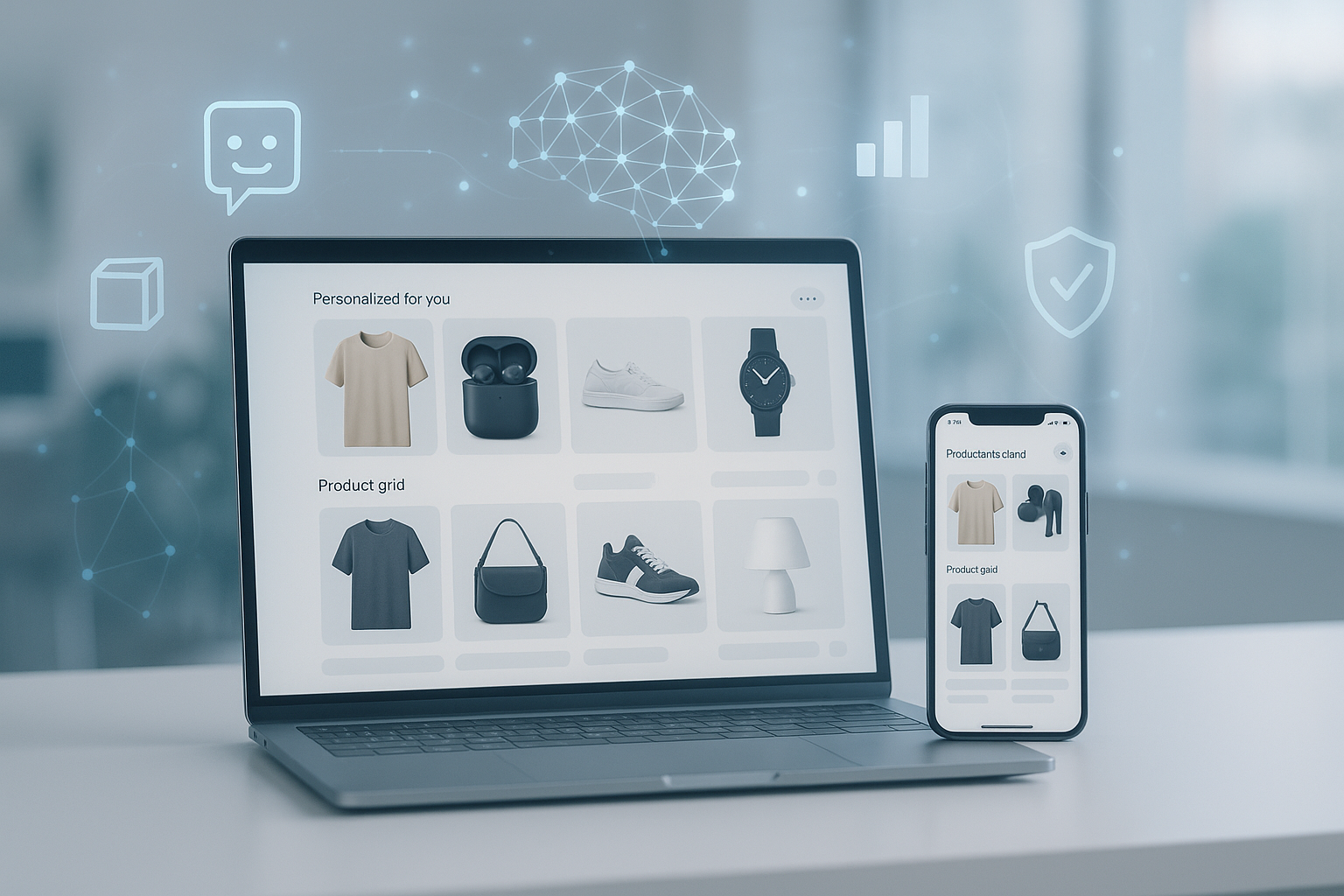
The e-commerce industry has experienced remarkable growth over the past decade, changing the way people shop for products and services. Consumers now expect fast delivery, personalized recommendations, and seamless online experiences. To meet these expectations, businesses are increasingly turning to Artificial Intelligence (AI).
AI is no longer just a futuristic technology used by large corporations. Today, online retailers of all sizes are using AI-powered tools to understand customer behavior, automate operations, and create more engaging shopping experiences. From recommending products to managing inventory and providing instant customer support, AI is becoming an essential part of modern e-commerce.
As digital commerce continues to evolve, AI is expected to play an even bigger role in shaping the future of online shopping.
What Is AI in E-Commerce?
AI in e-commerce refers to the use of intelligent algorithms and machine learning technologies to improve various aspects of online retail.
These systems analyze customer data, identify patterns, and make decisions that help businesses optimize operations and enhance user experiences.
Unlike traditional software that follows fixed rules, AI can learn from new information and continuously improve its performance over time.
This adaptability allows businesses to respond more effectively to changing customer preferences and market trends.
Personalized Shopping Experiences
One of the most noticeable applications of AI in e-commerce is personalization.
When customers visit an online store, AI analyzes browsing history, purchase behavior, and search activity to recommend products that match their interests.
Instead of displaying the same products to every visitor, businesses can create customized shopping experiences for each user.
Personalized recommendations often improve customer satisfaction while increasing the likelihood of repeat purchases.
As AI technology advances, personalization is becoming increasingly accurate and valuable.
Smarter Product Recommendations
Recommendation engines powered by AI have become a key feature of many successful online stores.
By analyzing customer preferences and shopping habits, AI suggests products that users are more likely to purchase.
For example, someone buying a smartphone may also receive recommendations for protective cases, chargers, or wireless earbuds.
These intelligent suggestions improve convenience for customers while helping businesses increase average order values.
The result is a more efficient and engaging shopping experience.
AI-Powered Customer Support
Providing timely customer service can be challenging for growing businesses.
AI-powered chatbots and virtual assistants help solve this problem by answering common questions instantly.
Customers can receive support regarding:
- Order tracking
- Product availability
- Return policies
- Shipping information
- Basic troubleshooting
When more complex assistance is required, human representatives can take over the conversation.
This combination improves response times while reducing operational costs.
Inventory Management and Demand Forecasting
Managing inventory efficiently is one of the biggest challenges in e-commerce.
Excess inventory increases storage costs, while shortages can lead to lost sales.
AI helps businesses analyze historical sales data, seasonal trends, and customer demand to forecast future inventory requirements.
With better predictions, retailers can:
- Reduce overstocking
- Avoid stock shortages
- Improve warehouse efficiency
- Optimize purchasing decisions
Accurate forecasting contributes to smoother operations and higher customer satisfaction.
Dynamic Pricing Strategies
AI enables businesses to adjust prices based on changing market conditions.
Instead of relying on static pricing models, intelligent systems analyze factors such as demand, competition, inventory levels, and customer behavior.
Retailers can update prices automatically to remain competitive while maximizing revenue opportunities.
Although pricing strategies must remain fair and transparent, AI provides valuable insights that support informed decision-making.
Fraud Detection and Payment Security
Online fraud continues to pose significant risks for e-commerce businesses.
AI systems can monitor transaction patterns and identify suspicious behavior in real time.
By recognizing unusual purchasing activity or potential payment fraud, AI helps businesses respond quickly before financial losses occur.
This additional layer of protection benefits both retailers and customers by strengthening trust in online transactions.
As cyber threats evolve, AI-driven security tools are becoming increasingly important.
Better Marketing Campaigns
AI also improves digital marketing within e-commerce platforms.
Businesses can analyze customer data to identify target audiences, predict buying behavior, and deliver personalized promotional messages.
AI supports:
- Email campaign optimization
- Customer segmentation
- Product recommendations
- Advertising performance analysis
- Content personalization
Rather than relying on broad marketing strategies, retailers can focus on delivering relevant experiences to individual customers.
Voice Search and Smart Shopping
Voice-enabled devices and virtual assistants are changing how consumers search for products.
AI-powered voice recognition allows shoppers to find items, compare prices, and complete purchases using spoken commands.
As voice technology improves, businesses may optimize online stores for conversational search experiences.
This trend could make shopping even more convenient while creating new opportunities for customer engagement.
Challenges of AI in E-Commerce
Despite its many advantages, AI implementation comes with several challenges.
Data Privacy
Collecting and analyzing customer information requires responsible data handling and compliance with privacy regulations.
High Initial Investment
Developing advanced AI systems may require significant financial and technical resources.
Algorithm Bias
Poor-quality training data can produce inaccurate recommendations or unintended biases.
Dependence on Technology
Businesses should balance automation with human oversight to ensure quality customer experiences.
Addressing these challenges is essential for sustainable AI adoption.
The Future of AI in Online Shopping
AI is expected to become even more integrated into e-commerce in the coming years.
Future innovations may include:
- Hyper-personalized shopping journeys
- AI-powered virtual shopping assistants
- Predictive purchasing suggestions
- Automated warehouse operations
- Visual search technology
- Enhanced fraud prevention systems
As technology continues advancing, online retailers will have new opportunities to improve efficiency while delivering exceptional customer experiences.
Consumers can also expect faster, smarter, and more personalized interactions throughout their shopping journeys.
Final Thoughts
Artificial Intelligence is transforming e-commerce by making online shopping more personalized, efficient, and secure. From intelligent product recommendations and automated customer support to inventory optimization and fraud detection, AI enables businesses to deliver better experiences while improving operational performance.
Although challenges such as data privacy and implementation costs remain, the long-term potential of AI in e-commerce is undeniable. Companies that embrace intelligent technologies responsibly will be better positioned to adapt to changing consumer expectations and compete in an increasingly digital marketplace.
As the future of online shopping continues to evolve, AI is set to become one of the driving forces behind innovation, helping businesses and customers benefit from smarter, faster, and more connected retail experiences.