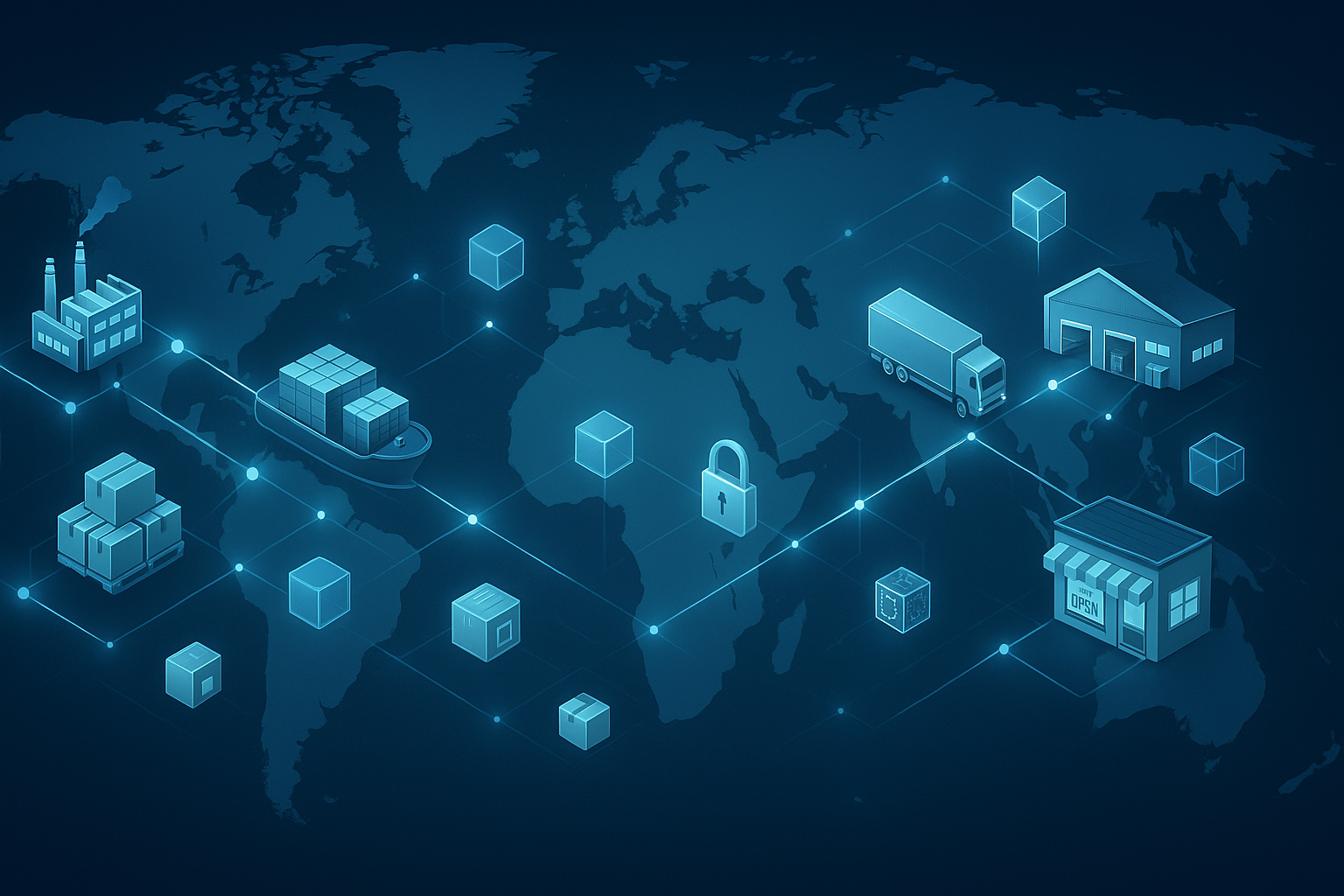
In today’s global economy, supply chains have become more complex than ever. Products often travel through multiple countries, manufacturers, distributors, and retailers before reaching the final customer. While this interconnected system enables businesses to operate efficiently on a global scale, it also creates challenges related to transparency, security, fraud, and tracking.
This is where blockchain technology is making a significant impact.
Originally developed as the technology behind cryptocurrencies like Bitcoin, blockchain has evolved far beyond digital currencies. Today, businesses around the world are exploring blockchain solutions to improve supply chain management, reduce inefficiencies, and build greater trust among stakeholders.
As companies face increasing pressure to provide transparency and accountability, blockchain is emerging as one of the most promising technologies for transforming supply chains.
Understanding Supply Chain Management
Supply chain management involves the movement of goods, information, and services from raw material suppliers to end consumers. Every stage of the process requires coordination between multiple parties.
A typical supply chain may include:
- Raw material suppliers
- Manufacturers
- Logistics providers
- Warehouses
- Distributors
- Retailers
- Customers
Managing these processes efficiently is essential for reducing costs and ensuring product quality. However, traditional supply chain systems often suffer from limited visibility, data silos, manual paperwork, and lack of trust between participants.
These challenges can lead to delays, errors, counterfeit products, and financial losses.
What Is Blockchain Technology?
Blockchain is a decentralized digital ledger that records transactions across a network of computers. Instead of storing information in a single centralized database, blockchain distributes data across multiple nodes.
Every transaction is recorded in a block and linked to previous blocks, creating a secure and immutable chain of records.
Key features of blockchain include:
- Transparency
- Security
- Decentralization
- Immutability
- Real-time data sharing
Because records cannot be easily altered once added to the blockchain, participants can trust the accuracy of the information.
The Need for Blockchain in Supply Chains
Traditional supply chains often rely on separate databases maintained by different organizations. As products move through the supply chain, information is updated manually and shared through emails, spreadsheets, or paper documents.
This fragmented approach creates several problems:
Lack of Transparency
Businesses often struggle to track products throughout the entire supply chain.
Counterfeit Products
Fake goods enter markets due to poor verification systems.
Data Inconsistencies
Different organizations may maintain conflicting records.
Delays and Inefficiencies
Manual processes slow down operations.
Limited Trust
Participants may not fully trust information provided by other parties.
Blockchain addresses many of these challenges by creating a shared and transparent source of truth.
How Blockchain Improves Supply Chain Transparency
One of the biggest advantages of blockchain is its ability to provide end-to-end visibility.
Every transaction and movement of goods can be recorded on the blockchain. This allows all authorized participants to access the same information in real time.
For example, if a food product moves from a farm to a processing facility, warehouse, and supermarket, each step can be recorded on the blockchain.
Consumers can then verify:
- Product origin
- Production date
- Transportation history
- Storage conditions
- Authenticity
This level of transparency helps build trust between businesses and customers.
Enhancing Product Traceability
Traceability is critical in industries such as food, pharmaceuticals, and luxury goods.
When contamination, defects, or recalls occur, companies must quickly identify affected products.
Traditional tracking systems can take days or even weeks to trace a product’s journey.
Blockchain significantly improves this process by creating a permanent record of every transaction.
With blockchain, businesses can:
- Track products instantly
- Identify affected batches quickly
- Reduce recall costs
- Improve customer safety
This capability is particularly valuable in food supply chains, where rapid responses can prevent health risks.
Reducing Fraud and Counterfeiting
Counterfeit products cost businesses billions of dollars every year.
Industries such as pharmaceuticals, electronics, fashion, and luxury goods are especially vulnerable.
Blockchain helps combat counterfeiting by creating verifiable digital records for products.
Each product can be assigned a unique digital identity stored on the blockchain.
Customers and businesses can verify authenticity by checking blockchain records, making it much harder for counterfeit goods to enter the market.
Improving Efficiency Through Automation
Supply chains involve numerous documents, approvals, and transactions.
Many of these processes are still handled manually, increasing the risk of errors and delays.
Blockchain can automate many tasks through smart contracts.
Smart contracts are self-executing agreements that automatically perform actions when predefined conditions are met.
For example:
- Payments can be released automatically after delivery confirmation.
- Inventory updates can occur instantly.
- Compliance checks can be automated.
This reduces paperwork, speeds up transactions, and lowers administrative costs.
Strengthening Supply Chain Security
Cybersecurity threats are becoming increasingly common in global supply chains.
Traditional centralized databases are attractive targets for hackers because compromising a single system can expose large amounts of sensitive information.
Blockchain’s decentralized structure provides stronger security.
Because records are distributed across multiple nodes, altering data requires consensus from the network.
This makes unauthorized modifications significantly more difficult.
As a result, businesses can protect sensitive supply chain information more effectively.
Real-World Applications of Blockchain in Supply Chains
Many major companies are already implementing blockchain technology.
Food Industry
Food companies use blockchain to track products from farms to store shelves, improving food safety and reducing contamination risks.
Pharmaceutical Industry
Blockchain helps verify the authenticity of medicines and prevent counterfeit drugs from entering the market.
Manufacturing
Manufacturers use blockchain to track raw materials and ensure quality standards throughout production.
Retail
Retailers can provide customers with transparent information about product sourcing and sustainability.
These real-world applications demonstrate blockchain’s growing role in modern supply chains.
Challenges of Blockchain Adoption
Despite its benefits, blockchain adoption is not without challenges.
Implementation Costs
Developing and integrating blockchain systems can require significant investment.
Scalability Issues
Some blockchain networks struggle to process large numbers of transactions efficiently.
Regulatory Uncertainty
Governments are still developing regulations related to blockchain technology.
Industry Adoption
The effectiveness of blockchain often depends on widespread participation from all supply chain partners.
Overcoming these challenges will be essential for achieving large-scale adoption.
The Future of Blockchain in Supply Chain Management
The future looks promising for blockchain-based supply chains.
As technology continues to mature, businesses are expected to adopt more advanced blockchain solutions that improve efficiency, transparency, and trust.
Future developments may include:
- AI-powered blockchain analytics
- Automated logistics systems
- Enhanced sustainability tracking
- Global digital supply chain networks
- Improved product authentication systems
Organizations that embrace blockchain early may gain a significant competitive advantage in the years ahead.
Final Thoughts
Blockchain is transforming supply chain management by addressing some of the industry’s biggest challenges. Through enhanced transparency, traceability, security, and automation, blockchain enables businesses to build more efficient and trustworthy supply chains.
While challenges such as scalability and adoption remain, the long-term potential of blockchain is undeniable. As companies continue to seek better ways to manage complex global operations, blockchain is likely to become a core component of future supply chain systems.